
Why So Many of My Students Are Mothers
September 2026 · 4 min read · By Vanessa Chugani
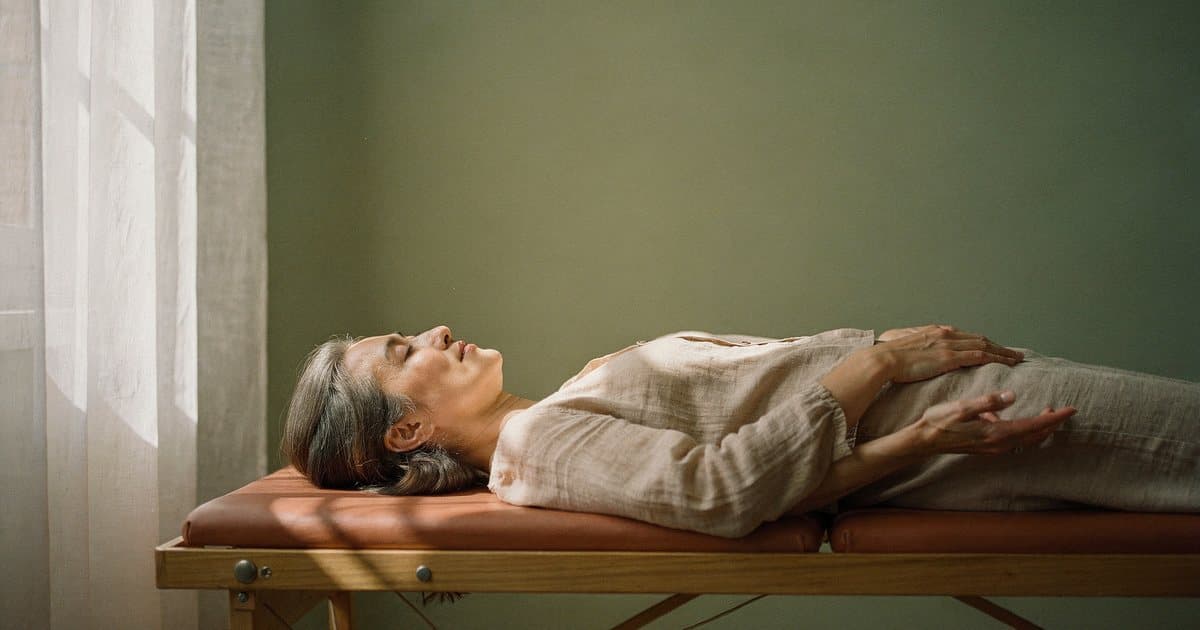
Most of the women who train with me in Canggu are mothers. Not every one, but most. Somewhere in the second class, usually while we are practising hand positions on each other, I hear some version of the same sentence: I cannot remember the last time somebody did something for me.
What they have been doing instead
They know how to give. That part is not the problem. A mother spends years reading a room before anyone else does: who is hungry, who is overtired, who needs picking up before they know it themselves. She gets good at it. She gets so good at it that she stops noticing when the same attention is owed back to her.
By the time a woman finds her way to Level 1, her children might be teenagers, or grown, or she might still have small ones at home. It does not matter much. What she has in common with the others in the room is the habit of going last. She has built a life around noticing everyone else's needs before her own, for so long that noticing her own has started to feel like a skill she never learned.
Where it starts to show
It shows up in small ways before it shows up in big ones. Sleep that will not come, even when the house is finally quiet. A jaw that stays clenched through the day and shoulders that will not drop. She often puts this down to age, or to the ordinary demands of raising a family, and she is half right. It is stress. It has just been running for so long that she has stopped clocking it as stress and started treating it as personality.
I wrote more about this pattern in When people tend to come, because it is not only mothers who arrive this way, though they make up a good share of the room.
Receiving is the harder skill
The first thing most of my students have to learn is not an attunement or a hand position. It is how to lie still on the table and let something be done for them without immediately working out how to return the favour. That takes longer than anyone expects. A woman who has spent two decades anticipating everyone else's needs will often apologise halfway through her first session, for taking up the hour, for not multitasking, for lying down in the middle of the day.
I tell them the same thing every time: this is the actual work. Not the symbols, not the hand positions. The lying still and letting it happen is what matters. Once that shifts, even slightly, everything taught in Reiki training lands differently, because she is no longer treating the class as one more thing to get right for somebody else's benefit.
Why some choose training over a session
A single session is already a stretch for some of them: ninety minutes with nothing required of her but to lie down. A few come to a private session first, find they want that feeling more often than a single hour allows, and go from there into training. Training asks for more: four levels, one built on the previous one. I think that is partly why it appeals to a woman who is used to being useful. It gives the receiving a shape she can justify to herself: she is here to learn something, and the lying down is simply part of the process. It becomes acceptable to want it because there is a certificate attached.
I do not mind that the justification is there. It gets her through the door. What she notices later, usually around Level 2, is that the certificate stopped being the reason she kept coming.
What changes once they start practising
Something interesting happens once a mother finishes her training and starts offering sessions to other people. She often becomes better at protecting her own time than she has ever been, because now the time is scheduled, named, and somebody else is expecting her to show up rested rather than depleted. Giving through this practice does not run on the same account as giving to a household. It asks her to arrive full, not empty, and that requirement rearranges a few things around it.
Not every student goes on to practise professionally. Some just want the tools for their own family. Either way, the pattern I see most often is a woman who came in exhausted and precise about everyone else's needs, and who leaves knowing her own a little better than she did before.