
Why So Many Mothers Don't Just Book a Session, They End Up Training
September 2026 · 5 min read · By Vanessa Chugani
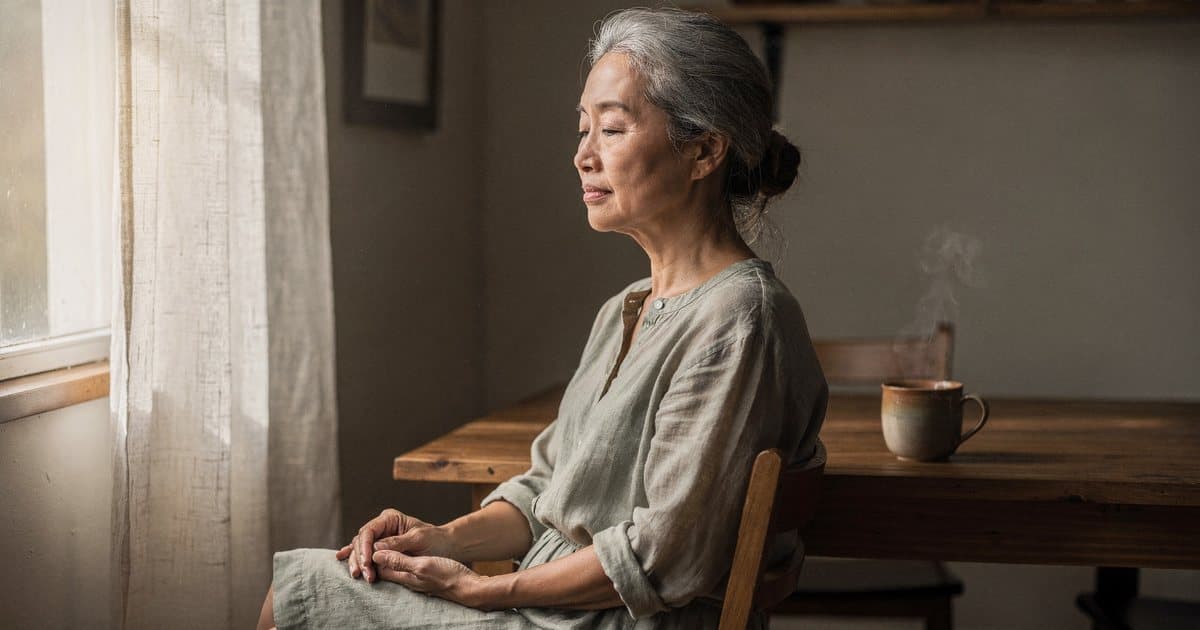
There is a pattern I have noticed over the years. A woman books a session, often at a point where she is running on not much. She is a mother, and she is tired in that particular way that motherhood produces: not just short on sleep, but short on anything that belongs only to her. She comes in, she has the session, and something settles. Then, a few weeks or months later, she gets in touch again. Not to book another session. To ask about training.
I find this genuinely interesting, because the reason is almost always the same. She does not want to stop receiving Reiki. She wants to be able to offer it. To her children when they are anxious at night. To her partner when he cannot switch off. To herself, quietly, before anyone else is awake. The session was the beginning, not the thing itself.
What motherhood actually does to a nervous system
Mothers arrive carrying something specific. Not just stress in the general sense, but the particular weight of being the person everyone else turns to. That does not stop when the children are older. If anything, it shifts shape. The nights get less broken but the emotional labour does not diminish, and the body holds all of it: the jaw that stays tight, the shoulders that will not come down, the sleep that is technically happening but does not feel like rest.
This is exactly what a Reiki session works with. Not as a treatment for anything, but as a full hour of support for a nervous system that has been running without a proper rest. What people report afterwards, and I say report because I am not making a promise, is that they slept better, that something felt lighter, that they could feel themselves again rather than just the weight of what they were carrying.
If that is what one session does, the logic of wanting to learn it is not hard to follow. You want that available at home, not just in a treatment room in Canggu.
The shift from receiving to learning
Training in Usui Shiki Ryoho is not a weekend of relaxation. It is a craft. Level 1 covers self-practice and working with people close to you, and for most mothers who come to me, that is exactly where they want to start: with something they can do for their family and for themselves, in ordinary life, without any equipment.
The attunement is part of the training, and I teach it live, in person or online, never through a recording. What I hand over is the practice itself: how to sit with someone, how to be present without fixing, how to use your hands. Most people who come from a caregiving background are already good at the presence part. What training gives them is a structure for it, and permission to call it something.
I teach groups of no more than six, often one to one, and we arrange the dates around each student rather than around a fixed calendar. That matters for mothers, whose lives do not organise neatly around advertised course dates. You can read more about how training works here.
Having something that is yours
There is something else that comes up, and it matters. Mothers who train often say that this is the first thing in years they have done entirely for themselves. Not for their children, not for the household, not for a career that fits around school hours. A skill they learned because they wanted to, that belongs to them, that they carry in their hands.
That is not a small thing. It is not why the practice works, but it is part of why it lands the way it does for this particular group of people at this particular point in their lives.
A 2025 review of eleven randomised trials found a significant improvement in quality of life among people who received Reiki, with the best results in sessions of an hour or more, and eight or more sessions in total. That is the honest argument for staying with it rather than dipping in once. But some of the women I teach go further than that: they move from being the person who receives sessions to being the person who offers them. Some go on to train to Master Teacher level. Some simply practise at home, quietly and consistently, which is what Level 1 is for.
When training makes more sense than another session
I would never suggest training to someone who just wants to receive sessions. Those are different things, and sessions are fine on their own. But if you have found yourself thinking that you would like to be able to do this at home, or for someone you love, that instinct is worth taking seriously. It is not as complicated as people expect, and it does not require any particular background or belief system.
What it requires is a willingness to learn a practice properly, to practise it regularly, and to let it be what it is rather than what you hoped it would be. For mothers who have spent years caring for other people, the offer of a tool that works quietly in ordinary life, and that you can turn toward yourself as readily as toward anyone else, tends to arrive at the right moment.
If you are curious about what training involves, the training page covers the levels, the format and the cost. If you would rather start with a session first, session options are here. Either is fine. There is no right order.