
What I Watch For in a Student's Face During Their First Attunement
October 2026 · 3 min read · By Vanessa Chugani
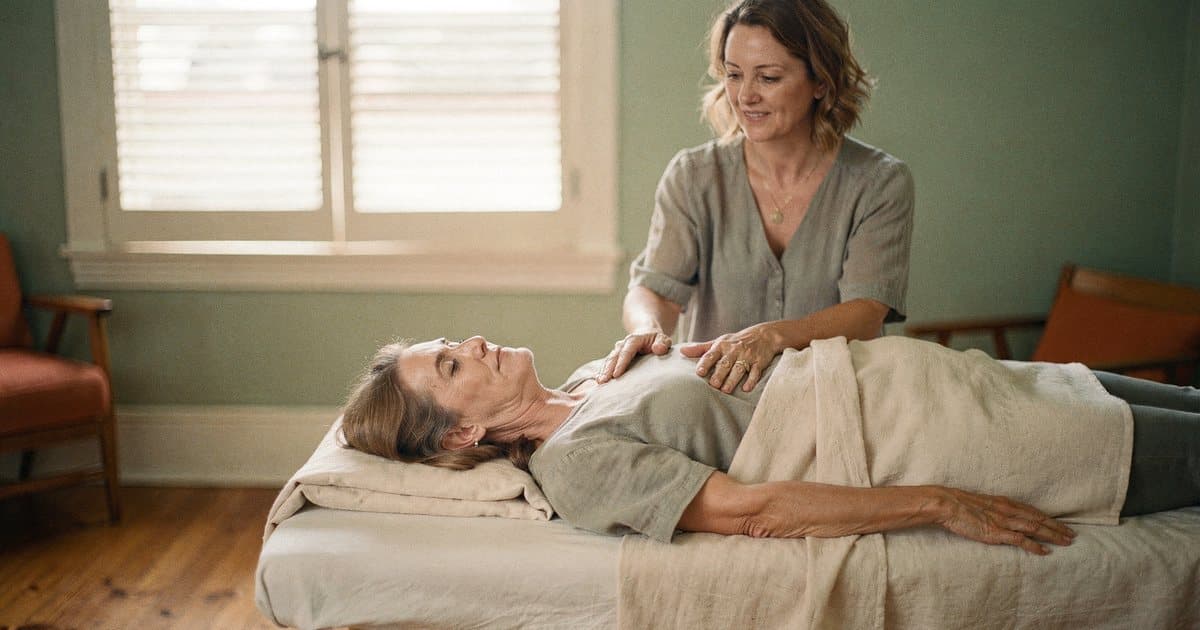
A first attunement happens in a quiet room, with the student sitting with their eyes closed and their hands open in their lap. I'm close by for the few minutes it takes, and for that stretch of time, their face is the only information I have. After enough years teaching Level 1, I've learned to watch it closely and trust it only so far.
What I'm actually watching for
The breath usually goes first. Someone who sat down holding it high in the chest will often drop into slower, longer breaths within the first minute, sometimes without noticing it themselves. The jaw softens. Shoulders that were up near the ears come down a little. Colour can shift in the face, a flush or a paling, and eyelids sometimes flicker the way they do just before sleep.
Some students tear up. Others look as if they've simply drifted off. A few show almost nothing: still, even, hard to read. All of that is ordinary, and none of it tells me as much as it looks like it should.
Why I don't read too much into it, in the moment
I used to think a strong visible reaction meant a strong attunement, and a still face meant a flat one. Teaching enough people cured me of that. A student who looked entirely unmoved will sometimes tell me a week later that their sleep changed, or that something in them settled that had been stuck for a long time. A student who cried through the whole thing sometimes says the week afterwards passed much like any other.
Feeling nothing during an attunement is normal, and it's worth saying plainly rather than leaving a student to wonder if they did something wrong. I'd rather someone arrive at Level 1 with an accurate idea of what the attunement might hold than a romantic one borrowed from somewhere else. Preparing for an attunement covers what I tell students beforehand, and most of it comes down to one point: there is no correct face to make.
What tells me more than the face does
The useful information arrives later, usually days later, not in the room. People mention sleep that finally comes properly, a jaw that has stopped clenching at night, or feeling steadier through a week that would normally have knocked them sideways. None of that shows up as an expression I can watch for in real time. It shows up in how someone describes their week when I see them next, or in a message a few days on.
That's part of why Level 1 runs in groups of six at most, often fewer. I want enough time with each student to ask what actually changed, not just to watch what happened on their face while it was happening. Training works the same way through every level, in Canggu or live online, and it's taught live each time: never a recording, never an automated attunement.
An honest face is not a performance
None of this means the moment doesn't matter. It matters a great deal, just not in the way it looks like it should from the outside. A face doing very little during an attunement is not a face doing nothing. I've learned to hold my read of it loosely and ask the real question afterwards instead. That's why I ask every student, a few days later, some version of the same thing: how did you sleep this week.