
Sometimes We Simply Need To Breathe
October 2026 · 3 min read · By Vanessa Chugani
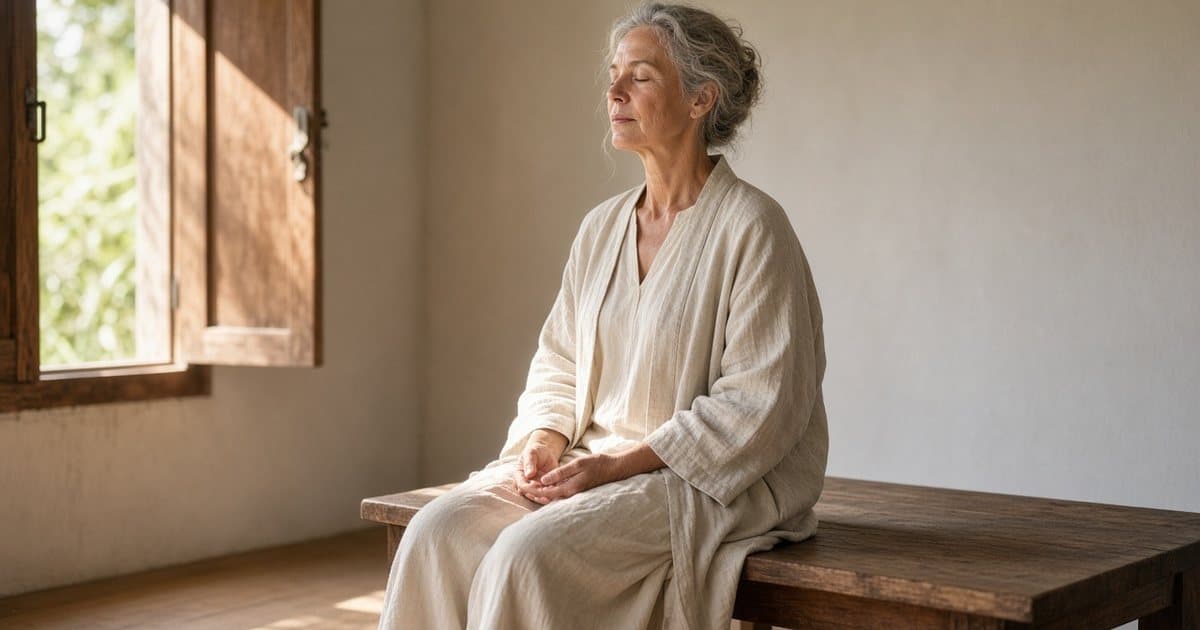
Most people who come to see me are trying very hard. They have usually spent the whole day solving something, and they walk in ready to solve this too, checking whether they are sitting right, whether the breathing is “correct”. They want the session to work, the way a kettle works or a key turns. The shift, when it comes, almost always starts at the exact point they stop trying and simply breathe.
Arriving ready to fix something
People often arrive holding their breath without noticing it. The shoulders sit up near the ears, the jaw stays set somewhere just short of clenched, and the mind keeps running through what the week still owes it. Many expect the hour to be something done to them, a procedure with a predictable result, in the way a massage works a knot loose. They are waiting for an outcome rather than letting anything happen, because waiting for an outcome has worked for them everywhere else in their lives.
This isn't a failing. It is what a nervous system does after months, sometimes years, of running on alert. It keeps managing, even lying still on a table in a quiet room with nowhere left to be. The body that can't put a task down at a desk generally can't put one down here either, not straight away. It needs to be told, gently and more than once, that there isn't a task.
What breathing actually changes
The shift is rarely dramatic. Someone stops gripping the idea that something needs to happen, and the breath drops lower on its own, slower and less supervised. The jaw loosens because nobody is checking on it any more. That is usually where people report the tiredness lifting a little, or the first properly deep breath they have taken all week.
Reiki here is rest and support, not a treatment for any medical condition, and I am not going to claim a mechanism for what happens next, because I don't have one to offer. There's a small but growing body of placebo-controlled research into Reiki for stress, low mood and anxiety, and the researchers behind it still call their own findings inconclusive, which is a fair way to leave it. What stood out to me is that the effect turned up in people who were genuinely struggling, not in people who were already fine. That matches the room: the body has something to settle out of, and settling takes a breath rather than an instruction.
The same pattern in training
I see the identical pattern in people learning Usui Shiki Ryoho. A new student often waits for the attunement to do something to them, some proof that it has started. Feeling nothing is normal, and it is worth saying plainly before anyone sits down for one, which is most of why I wrote about preparing for an attunement.
What tends to land, for a student as much as for someone lying on the table, is the moment they stop checking whether it is working and just breathe through the hour instead. The symbols and the hand positions matter, and we spend real time on them. But the breath is what lets any of it land.
What to do instead of trying
If you recognise yourself in any of this, the plain version is enough: let the breath go where it wants and stop monitoring the result. You don't need to arrange your hands a particular way or count anything.
If you are not sure whether what you are carrying would even respond to this, when people tend to come sets out the ordinary situations people are in the first time they book a session. Most are not looking for anything mystical. They are tired, or carrying more than they can put down.
If you would rather learn the breathing yourself, alongside the rest of what goes with it, the training runs in Canggu or live online, in groups of six or fewer: Reiki training, Level 1 to Master Teacher.