
The Slow Way I Started Quietly Disappearing From Myself
October 2026 · 4 min read · By Vanessa Chugani
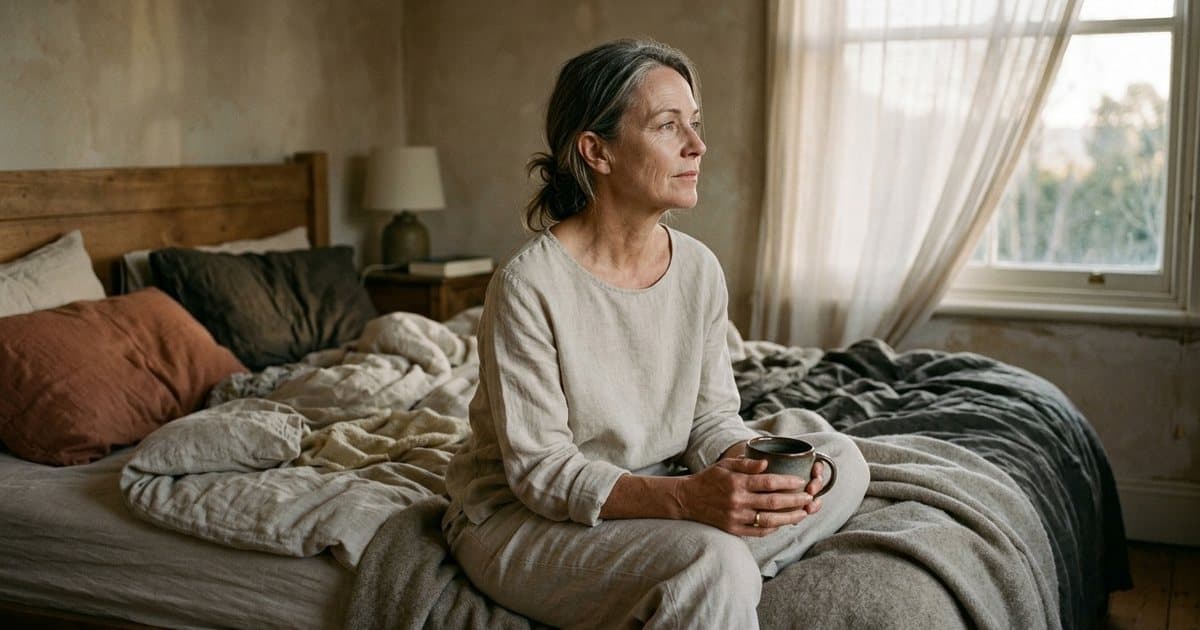
Nobody plans to vanish from their own life. It tends to happen in small, polite steps. You answer one more message before you eat. You hold your breath through someone else's bad day and call it being strong. You stop asking what you need because the list in front of you is already too long.
I work with people whose nervous systems have been running hot for a long time. Many of them are not in crisis when they first look for support. They are tired in a way sleep does not fix. They are still functioning. They are still kind. They simply cannot remember the last time they chose something for themselves without guilt.
That pattern is what I mean by quietly disappearing from yourself. Not a breakdown on the kitchen floor, though that happens too. More often it is erosion: your preferences go soft, your body stays braced, and you learn to live slightly to the side of your own life.
When caring becomes the whole story
Caregiving is honourable work. It is also hungry. It asks you to track another person's pain, schedule, fear and hope while your own signals get filed under "later".
Later becomes a habit. You notice the other person's appetite before yours. You plan around their appointments. You become skilled at reading a room and poor at reading yourself. From the outside it can look like devotion. From the inside it can feel like you have been edited out of the picture.
People often arrive saying they should not need help because nothing terrible has happened. I understand that. The absence of drama does not mean the absence of strain. A nervous system can carry too much for years without a single headline moment.
The body keeps the score in quiet ways
Stress, exhaustion, overwhelm and grief do not always arrive as thoughts. They show up in the jaw that will not unclench, the shoulders parked up by the ears, the chest that will not open, the stomach that grips, the body that will not settle at night.
That is nervous-system tension, and it is exactly the territory Reiki works with here: rest and support when you have been holding more than you can put down. It is not a treatment for any medical condition, and it does not replace medical care. It is a space where the pace slows enough for your own signals to become audible again.
What people report afterwards is wider than calm. Sleep that finally comes. Pain sitting further away. Appetite returning. A tiredness that lifts. Feeling steadier and less alone with what they walked in carrying. I describe it that way because those are reports, not promises. Your experience is your own.
If you are wondering whether you are "bad enough" to book, you might find when people tend to come a useful read. The bar is lower than most people think.
Self-care as early noticing, not last resort
I used to imagine self-care as something you earned after everything else was finished. That story keeps people waiting until the tank is empty. Early self-care is smaller and less photogenic. It is noticing when you skip a meal three days in a row. It is admitting you are resentful without calling yourself a bad person. It is asking for an hour before you are desperate for one.
Reiki training appealed to me for the same reason it appeals to many students now. It is a craft you can learn, not a mood you hope to catch on a good weekend. In Usui Shiki Ryoho you receive live teaching, a manual, an attunement, and support after. Symbols are part of Level 1 onward in how I teach. Groups stay small, often one to one, in Canggu or live online, always taught live rather than from a recording.
Some people come for private sessions. Some come to train because they want a steadier way to be with their own energy and with the people they love. Both paths start with the same shift: you stop treating your needs as an interruption.
Coming back without drama
You do not have to burn out to deserve care. You do not need a story that convinces anyone else. You only need enough honesty to say that running on empty has become normal, and normal is not the same as fine.
Disappearing from yourself is slow. Coming back can be slow too. It begins when you notice you are gone, and you stay long enough to listen. That is the work I hold space for, in session and in training, one person at a time.