
How My Own Self-Treatment Changed After I Started Teaching
November 2026 · 3 min read · By Vanessa Chugani
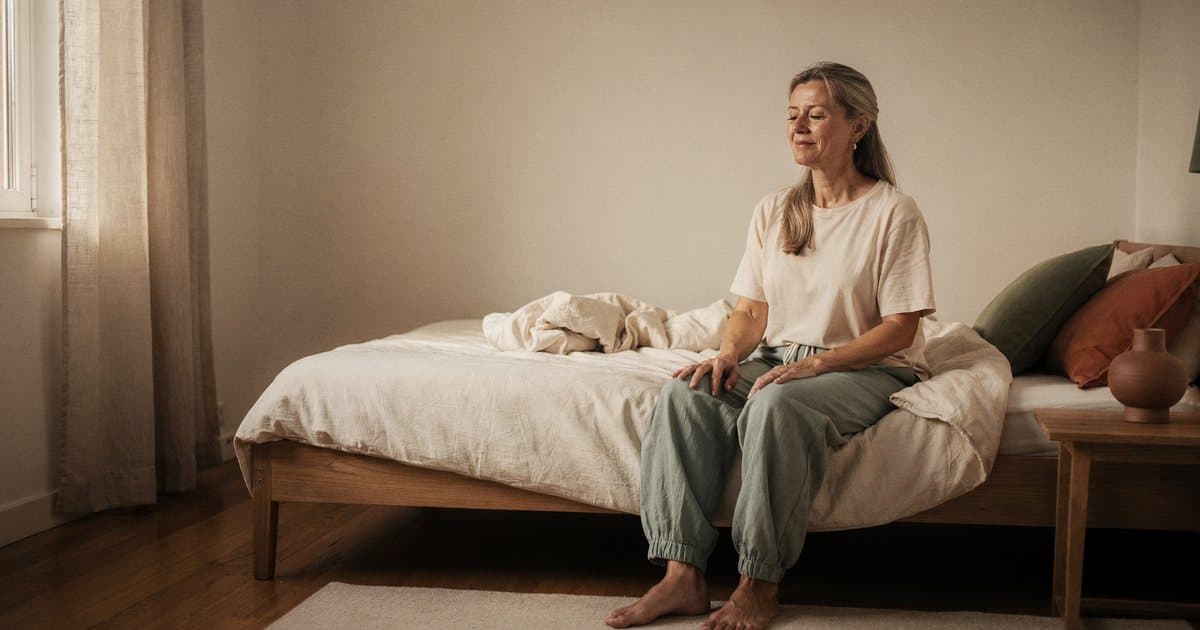
People sometimes assume that a Reiki Master Teacher's own self-treatment must be the fullest version of the practice there is: more symbols, more time, more ritual built up over the years. Mine went the other way. Since I started teaching Usui Shiki Ryoho, my own self-treatment has become smaller and more automatic, not bigger, and I think that says something true about what this practice actually is.
The idea that depth means more
It is an easy assumption to make. If a fuller self-treatment helps, then surely a teacher's own version should be the fullest one going. I held a version of that idea myself for a while. It seemed reasonable that someone who had gone the whole way through training, Level 1 to Master Teacher, would end up with the most elaborate self-practice of anyone in the room.
What actually happened was closer to the opposite. The more I taught other people how to do this for themselves, the plainer my own self-treatment became.
What teaching does to a practice
Teaching asks you to say what matters and drop the rest. A new student does not need a long explanation or a complicated sequence of positions. They need their hands somewhere on their own body, long enough to settle, and permission to stop overthinking the technique. I teach this live, in person or live online, never from a recording, because self-treatment is something a person learns by feel, not by watching someone else do it. That means I am in the room, or on the call, watching an actual student try it for the first time, usually in their very first level of training.
Saying the same plain instructions over and over, to one student after another, changes how you do the thing yourself. The extra steps I had picked up over the years, mostly out of habit rather than need, stopped making sense to keep once I could no longer explain to a student what they were for.
Smaller is not the same as careless
None of this means self-treatment stopped mattering to me. It means the shape of it changed. Most days now mine is short: hands resting somewhere on my own body, nothing performed about it, done because my nervous system is asking for a few quiet minutes rather than because a routine demands them.
That fits what this practice actually offers. It is rest and support, not a medical treatment and not a substitute for seeing a doctor, and a short, ordinary habit sits closer to that than a long production ever did.
People who keep up even a short self-treatment often report noticing the ordinary things first: a jaw that has unclenched before they noticed it was tight, sleep coming a little easier, a body that settles faster at night. None of that needs forty minutes and a lit candle to happen. It needs doing, in whatever small and repeatable form actually fits into a day.
What I tell students now
I would rather a student arrive with accurate expectations than romantic ones, so I tell them this directly: you are not building toward something bigger the deeper you go. If anything, the practice tends to get quieter and more ordinary, which is its own kind of progress, just not the kind people walk in expecting.
People who come to me about training sometimes worry it means reorganising a life around the practice: a dedicated room, a daily hour, a whole new identity. In my experience it does not work that way for most people. The practice tends to fold itself into an already full life rather than asking for a separate one, which is partly why I keep groups small, no more than six people and often one to one. A plain, repeatable thing is easier to teach, and easier to learn.
On the days a few minutes alone is not enough, that is what a proper session is for. The rest of the time, a few minutes with my hands resting in my lap does what it needs to do, and it has been enough for a long time now.